Tencent’s "Stars Project" Helps the Digital Innovation and Development of 100 Small and Medium-sized Museums
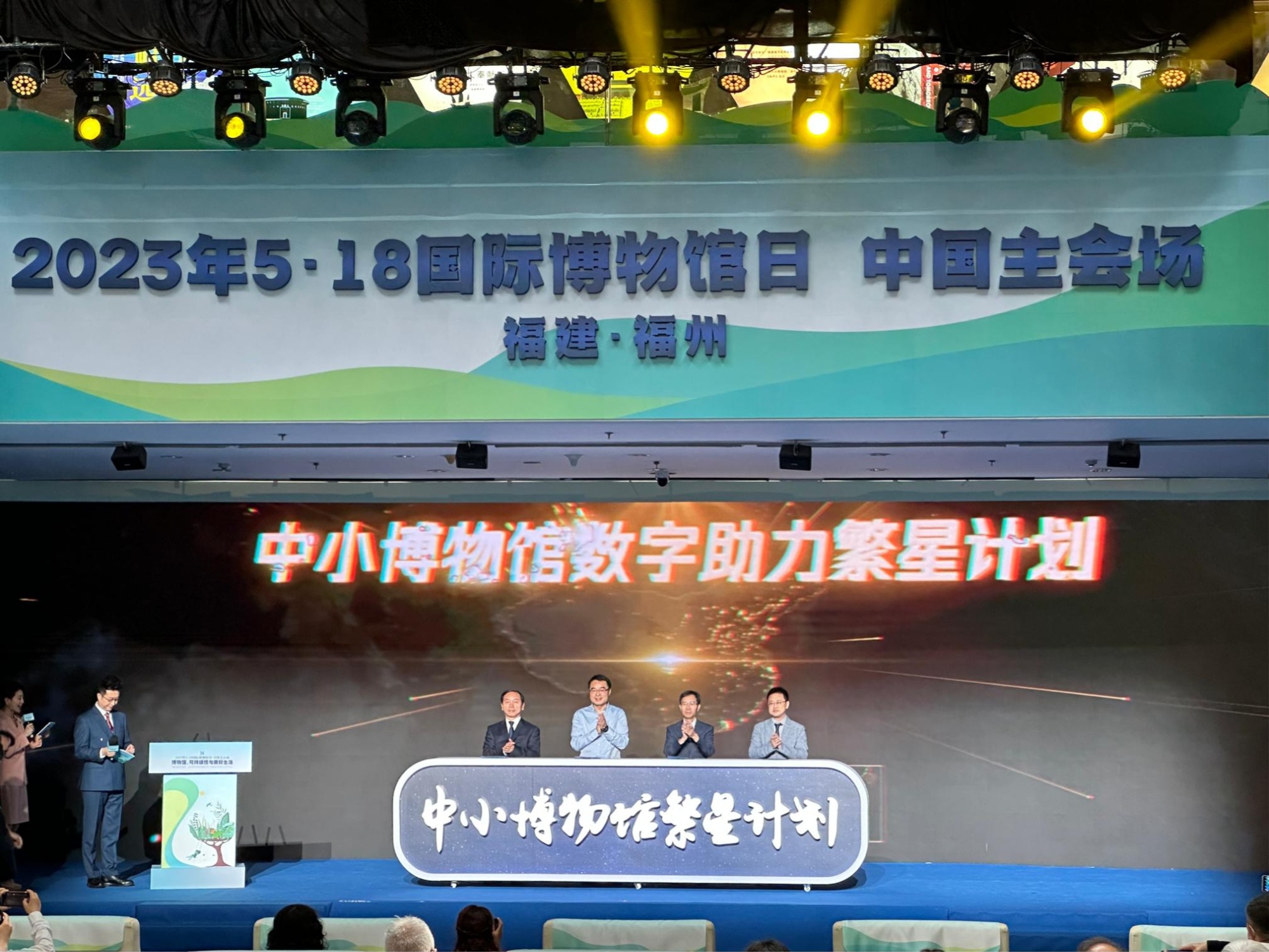
On May 18th, the China main venue of the International Museum Day was opened in Fuzhou. At the meeting, under the guidance of National Cultural Heritage Administration, Tencent Sustainable Social Value Division and China Cultural Relics Newspaper jointly launched the "Small and Medium-sized Museums’ Digital Stars Project" (hereinafter referred to as the Stars Project). Liu Yang, Director of National Cultural Heritage Administration Museum and Social Cultural Relics Department, Liu Shifa, President of China Cultural Relics Newspaper, Chen Fafen, Vice President of Tencent, and Zhan Zhan, Head of Digital Culture Laboratory of Tencent’s Sustainable Social Value Department jointly launched the "Stars Project".
With the support of Sichuan Cultural Relics Bureau, China Lantern Museum and Luzhou Museum, as the first batch of pilot units to participate in the "Stars Project", launched a museum-specific applet on the 18th, integrating functions and contents such as exhibitions, collections, social education activities and video broadcasting, further improving the one-stop visit experience.
In recent years, there have been many innovations in digital gameplay in large museums. However, due to the reasons of funds and facilities, the development of many small and medium-sized museums is limited. In May 2021, the Central Propaganda Department, the Ministry of Culture and Tourism, the Ministry of Finance and the National Cultural Heritage Administration jointly issued the Guiding Opinions on Promoting the Reform and Development of Museums, proposing to implement the upgrading plan for small and medium-sized museums. Strengthen mechanism innovation and effectively revitalize the resources of grass-roots museums. According to the latest data from the official website of National Cultural Heritage Administration, by the end of 2021, there were 3,198 small and medium-sized museums in China, accounting for 51.7% of the total number of museums in China. How to make small and medium-sized museums play a greater role with the help of digital technology is urgent for all parties to integrate resources, communicate and cooperate.
The "Stars Project" mainly focuses on the digital construction of small and medium-sized museums. The first batch of 100 small and medium-sized museums will be selected to expand the innovative development and digital communication methods of small and medium-sized museums from four aspects.
The primary measure of the "Stars Project" is to build the capacity of digital platform, build the museum’s exclusive digital position, help improve the museum’s service capacity, and provide exhibition information, digital display of cultural relics, audio explanation, service guide, social education activities and other content construction. With the help of Tencent’s map smart cultural scheme and the characteristics of WeChat applet, which are light, convenient and easy to spread, and with the help of content operation, iterative upgrade and WeChat official account interconnection, the museum will strengthen the content dissemination and expand its influence and user coverage.
The second is to help the museum to create a video number. Through one-on-one counseling and planning by a professional video content production team, the live broadcast and short video communication form of "one museum+one exhibition+one curator/expert/gold medal commentator +N pieces of exhibits" is adopted to promote the "cross-border" communication of the museum.
The third is to carry out special digital ability training courses to help museum operators improve their ability to operate new media and use digital products, and become the museum’s exclusive "Wenbo Digital Officer".
The fourth is to help the museum’s cultural and creative IP development, build a link bridge for creators and supply chain partners through Tencent’s digital culture open platform, connect top cultural and creative design and development teams at home and abroad, build a second-generation material gallery, and provide 50 second-generation materials and patterns for each museum according to the collection’s characteristic collections. Hold a cultural and creative competition to guide high-quality creators to design special products for museum IP, realize synchronization with the concept of cultural and creative consumption, and create unique cultural and creative IP products that conform to the cultural symbols of each museum.