The number of colorectal cancer screening in Wenzhou ranks first in the province.
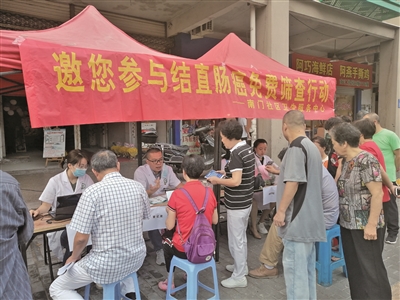
Free screening for colorectal cancer was held in Nanmen community.
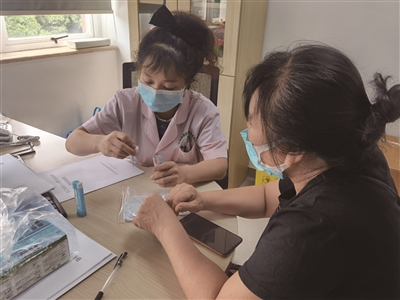
Community health service center to the jurisdiction50-74Preliminary screening for colorectal cancer was carried out among residents aged 18.
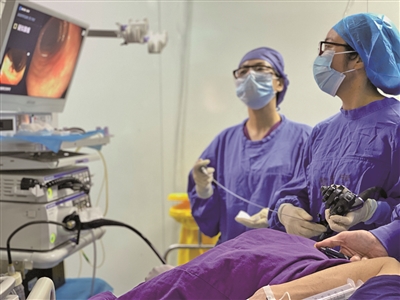
In the early stage, we carried out training on colorectal endoscopy in designated hospitals.
Today, did you have a "physical examination" of your intestines? In 2020, the Zhejiang provincial government listed the colorectal cancer screening project for key populations as one of the top ten livelihood projects. The reporter learned from the Municipal Health and Health Commission yesterday that as of September 27th, the city had conducted risk assessment and screening for more than 240,000 people and completed colonoscopy for 12,628 people, ranking first in the province. The completion rate of colonoscopy was 93.54%.
"acceleration" of people’s livelihood
Colonoscopy ranks first in the province.
Colorectal cancer refers to malignant tumors that occur in the colon and rectum. Regular colorectal cancer screening is one of the most effective means to prevent colorectal cancer.
The relevant staff of the project office of the downtown hospital said that it usually takes about 10-15 years to develop into colorectal cancer since the first abnormal cell began to grow into polyps. Through regular screening, most polyps/adenomas can be found and removed, which can prevent them from further developing into cancer.
In 2020, the Zhejiang provincial government incorporated the colorectal cancer screening program for key populations into the livelihood of the provincial government and provided screening services for registered residents aged 50-74 in Zhejiang province.
In April this year, the Wenzhou Municipal Health and Health Commission and the Municipal Finance Bureau issued the Implementation Plan of Colorectal Cancer Screening Project for Key Populations in Wenzhou in 2020. Each county (city, district) issued supporting plans respectively, and the screening was officially launched in June. According to the "Program", the average 500 yuan financial subsidy will be provided to the registered residents who are screened positive for colonoscopy in our city.
According to reports, the recruitment of the project is the responsibility of the community health service center. After the informed consent of the screening object, a questionnaire survey and fecal occult blood test will be conducted. If the questionnaire evaluates high risk or the fecal occult blood test is positive, it will be guided to the designated medical institution for colorectal examination.
As of September 27th, our city has conducted risk assessment and screening for 241,169 people. After the initial screening, 12,628 people have undergone colonoscopy, ranking first in the province, with the completion rate of colonoscopy reaching 93.54%, ranking second in the province, and achieving the task goal of 75% by the end of September ahead of schedule. The relevant person in charge of the CDC of the Municipal Health and Health Commission told the reporter that the completion rates of Yueqing City, Ruian City, Taishun County and Longgang City all exceeded 100, exceeding the task.
Health screening is "more inclusive"
4.5 out of every 10 people tested positive.
People’s livelihood benefits the people. The establishment of a screening model for colorectal cancer led by the government, coordinated by departments and participated by the whole society will help to improve the awareness rate of residents’ core knowledge of colorectal cancer prevention and treatment, popularize healthy lifestyles, strengthen residents’ awareness of active participation in screening, improve the early diagnosis rate and treatment rate of colorectal cancer in key populations, improve patients’ survival rate and quality of life, reduce mortality and future morbidity, and effectively control patients’ disease burden.
The data show that the 5-year relative survival rate of early colorectal cancer is over 90%, while the late survival rate is only 10%. "Early detection and early treatment are very important for the survival rate." The relevant staff of the project office of the downtown hospital said.
In this project, a 60-year-old man was transferred to a medical institution for colonoscopy because of his positive fecal occult blood test. A survey found that the intestinal polyp was 5cm, which was a huge polyp. Because the polyp growth position is relatively upward, the patient did not have any discomfort before. In the end, the "time bomb" was completely removed through minimally invasive surgery.
Another patient found early gastric cancer while finding intestinal polyps. The prognosis is good after surgical treatment.
According to the project inspection results, the overall positive rate is 45%, that is to say, 4.5 out of every 10 people are found to be positive. Among them, 4590 were benign lesions, 1075 were precancerous lesions, and 101 were diagnosed as colorectal cancer.
The reporter learned that colorectal cancer is known as the "silent killer" and usually has no symptoms in the early stage, which means that many people may have diseases, but they don’t know it. The screening of colorectal cancer is to identify patients with suspected cancer or precancerous lesions by using rapid and simple tests, examinations or other methods in the seemingly healthy (healthy, asymptomatic in the pre-clinical stage or undiagnosed) population. "Screening can detect colorectal cancer at an early stage, and the chance of early colorectal cancer cure is the greatest." The relevant person in charge of the CDC of the Municipal Health and Health Commission said that authoritative organizations and guidelines in the world recommend that fecal occult blood test should be conducted every 1-2 years and colonoscopy should be conducted every 10 years.
Health knowledge "micro-science popularization"
Protect the intestines, remember four wants and four don’t.
Colorectal cancer is one of the common malignant tumors. According to the statistics of the Municipal Center for Disease Control and Prevention, in 2019, colorectal cancer in Wenzhou ranked third in cancer incidence, accounting for 12.17% of all cancers; Colorectal cancer deaths accounted for 9.72% of all cancer deaths, ranking fourth in cancer deaths.
From the perspective of the whole province, the incidence and mortality of colorectal cancer are higher in men than in women. In addition, the risk of colorectal cancer increases with age, and about 90% of cases occur in people over 50 years old.
Risk factors for colorectal cancer include overweight or obesity, lack of exercise, unhealthy diet, smoking, excessive drinking, age, personal history of colorectal cancer or colorectal polyps, personal history of inflammatory bowel disease, family history of colorectal cancer or adenomatous polyp, genetic syndrome, and type 2 diabetes.
How to reduce risks? Experts say, to protect the intestines, remember that there are four things to do and four things not to do-
Regular screening is required. On the one hand, adenoma can be found by screening, and it can be prevented from progressing to colorectal cancer after resection. On the other hand, early colorectal cancer can be found, and early treatment is effective.
Keep a healthy weight. Overweight and obesity are associated with an increased risk of colorectal cancer.
Take regular exercise. Do at least 150 minutes of moderate intensity exercise or 75 minutes of high intensity exercise every week.
The diet should be mainly vegetarian. Two thirds of each meal consists of vegetables, whole grains and fruits, and the other third should be lean meat or vegetable protein.
Limit red meat intake. Red meat includes beef, pork and mutton. The more you eat, the greater the risk of colorectal cancer. Eat no more than 1 kg of red meat every week.
Avoid processed meat. Processed meat includes bacon, bacon, ham, sausage, fried and grilled meat.
Stop smoking.
Restrict drinking. In order to prevent cancer, it is best not to drink alcohol.
Reporter Sun Dan Yu/Wen photos are provided by the Municipal Health and Health Commission.