The People’s Daily approved Zhang Suzhou’s corruption case: the purchase and sale of TV dramas became the hardest hit by corruption in the radio and television system.
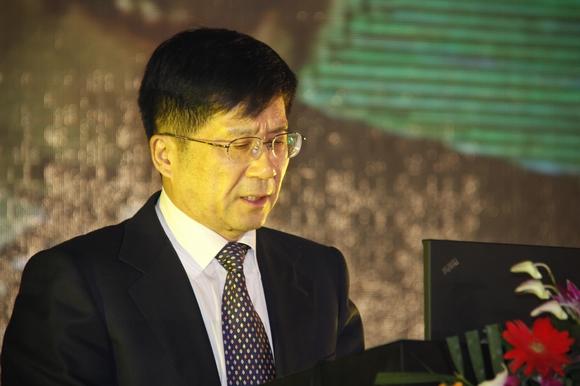
The case of Zhang Suzhou’s alleged bribery and corruption uncovered the tip of the iceberg of corruption in the domestic TV drama buying and selling industry.
The case of Zhang Suzhou, the former director of Anhui Radio and Television Station, which opened in November 2015, was suspected of accepting bribes and corruption, which not only exposed anhui tv’s crazy broadcast of TV series The Secret Behind, but also uncovered the tip of the iceberg of corruption in the domestic TV series buying and selling industry. At present, the purchase and sale of TV series has been regarded as the three major corruption-stricken areas in the radio and television system along with engineering construction and advertising.
Gifts, fake names, and wages are all kinds of corrupt means.
Recently, the case of Zhang Suzhou, the former director of Anhui Radio and Television Station, was heard on suspicion of accepting bribes and corruption. The procuratorate accused Zhang Suzhou of taking bribes of 11.396 million yuan, 47,000 US dollars, 179,000 yuan in shopping cards and 1.072 million yuan worth of gold bars from 2006 to 2014, and embezzling 3.393 million yuan of public funds. Previously, many former subordinates of Zhang Suzhou had been tried for involvement in the case. It is understood that the most striking corruption area in this case is the purchase and sale of TV dramas.
The investigators found that the purchase volume of TV dramas by Anhui Radio and Television Station in recent years obviously exceeded the actual demand. According to statistics, the station purchased 327 TV dramas from 2011 to 2013, with a total price of 2.4 billion yuan. In order to broadcast such a huge amount of TV series within the contract period, the TV channel broadcasts more than 10 TV series every day. Even so, by August 2014, Anhui Radio and Television had 21 TV dramas with a total value of 210 million yuan, and the inventory backlog was very serious.
According to insiders, the corruption in the purchase and sale of TV dramas is not unique to Anhui Radio and Television Station, but a "hidden rule" that has long been known in the industry. In 2014, Yu Yong, former director of the film and television drama department of Nanjing Radio and Television Group, and Li Chong, director of the original program purchase and sale center of Liaoning Radio and Television Station, were all dismissed, all of which were related to corruption in TV drama procurement.
In the past few years, in contact with some TV drama buyers and sellers, the reporter also learned something about the corruption in the TV drama buying and selling environment. For example, some TV station personnel in charge of TV drama procurement often bosse around in front of publishers. For the former, the latter is like a personal purse: the former treats guests to dinner and the latter is responsible for paying the bill; The former goes shopping to buy luxury goods, and the latter is also responsible for saving money … But obviously, compared with those huge bribes, what the reporter sees is only a tiny part of corruption, but it is enough to show his calm attitude and arrogance.
"According to different levels of TV stations, the production companies pay bribes in different ways," said the person in charge of TV drama procurement of a TV station. "In order to log on to some small TV stations or terrestrial channels, they will give small gifts to the film reviewers and purchasers, but if they want to knock on the door of some big TV stations or TV stations, they will directly give kickbacks or let the leaders of the TV stations make fake productions, thus giving them’ salaries’. Usually, the purchasing director of a TV station will not only accept bribes from a production company. After all, whoever can broadcast the drama and whose drama can’t be broadcast depends on the purchasing director’s words. "
Too much drama, weight, opacity, and power in small circles.
Why does a seemingly ordinary buying and selling link breed such serious corruption?
According to insiders, power rent-seeking is the crux of this problem.
For many years, China has been ranked as the largest producer of TV dramas in the world, with about 15,000 episodes produced each year, but only half of the new dramas can be broadcast on TV stations every year.
Specific to the film buying link of TV stations, each TV station will collect industry information and purchase TV dramas that meet its needs, such as Hunan Satellite TV’s positioning as youth and Oriental TV’s positioning as urban fashion. According to the audience, broadcast positioning and other factors, the TV station will list a detailed film review form, which will include detailed items such as cast and theme content. According to these contents, the staff will score and select the TV series that they finally decide to buy. In addition, some more powerful TV stations intervene earlier in some key projects, that is, arrange TV producers or purchasers to follow up when the producers just put forward the project planning intention, so as to ensure that the content, style and standard of TV drama production meet the requirements of TV stations. However, due to the unclear industry evaluation standards and great quantitative flexibility, the opacity of the purchase and sale links is inevitable. "Whether to buy or not to buy a drama is actually a matter of words for some people in some TV stations." An industry insider said.
Even if the TV series is sold, it is still a problem to get back the money for selling the TV series. It is understood that the traditional way of buying and selling TV dramas is that after the production company signs a contract with the TV station, the TV station pays in two or three phases. However, the current situation is that the payment cycle of TV stations often lags behind, and it is not surprising to pay half a year or even a year or two later than the signed contract. Even the most powerful TV stations in China can hardly guarantee the timely performance.
"Domestic TV drama trading has always been a buyer’s market. The market position of both parties is unequal, and the decision-making power of the buyer is too concentrated in the hands of a few people. It should be said that it is a problem caused by the system and mechanism." A manager of a film and television drama company in Shanghai said that in terms of the identity of both parties to the transaction, TV stations are not real market players, but have more publicity functions, which directly constitutes a monopoly of TV drama broadcasting platforms in a certain sense and gives TV stations a stronger voice in the purchase and sale of TV dramas. However, due to the weak supervision of this right to speak, the strength of the right to speak often evolves into unfairness in transactions. "Some TV stations maliciously default on the final payment after buying a drama is a performance." The manager said that at present, most domestic production companies are in light asset company, and they only rely on a small amount of funds to produce and operate. Even some production companies with hundreds of millions of yuan of funds can’t afford frequent capital backflow, and for small companies, the interruption of cash flow undoubtedly means the arrival of survival crisis. When buying and not buying becomes the power of "killing and seizing", corruption will also breed.
"This is a small circle, and it is easy to trade a little money. The hidden rules in this circle, if you don’t follow them, it will be difficult for you to sell the plays you made, and you can’t survive in this industry, so in order to sell the plays, you can only give kickbacks to the purchasing person in charge; On the other hand, if you follow the rules, you can find a way out for your play, and secondly, the gifts are cooked and the TV station will naturally pay more neatly. " A person in charge of a film and television drama company in Beijing said that the average production enterprise spends about 5% of the total sales on public relations and reception, while small enterprises may spend 10% to "manage" the relationship. This part of the cost is called the "gray cost" of TV dramas. Now many large companies will pay sky-high prices for one of their own TV dramas, in fact, the "gray cost" here accounts for a large proportion.
Self-discipline, encouragement, standardization and mechanism construction are the key.
People in the industry generally believe that the outstanding problems in China’s TV drama market are insufficient information, unclear division of labor and incomplete industrial system. Wang Yong, chairman of Shaanxi Cultural Investment Group, even pointed out: "China’s TV drama industry is more like a circle than a mature industrial market."
Although it is a veritable TV drama country, it is obvious that China’s road to becoming a TV drama country is not smooth under the current industrial situation. On the road from a big TV drama country to a powerful TV drama country, the serious corruption in the purchase and sale process is like a cancer. If it is not contained, it will grow bigger and bigger, which will eventually threaten the lifeline of the whole industry.
"Of course, the problems existing in the system and mechanism must be solved first," Wang Yong said. "Breaking the contradiction between the highly monopolized TV drama broadcasting platform and the relatively mature TV drama production mechanism, making the country’s TV drama industry embark on a truly standardized market road and promoting the production, distribution and broadcasting of TV dramas to a more reasonable industrial layout is the fundamental means to curb the corruption of buying and selling."
Fan Zhizhong, executive director of the International Film and Television Development Research Institute of Zhejiang University, also believes that due to the imperfect system and mechanism, the ambiguous status of TV stations in TV drama trading has also made some people desperate to take risks. "Although TV executives seem to be in a relatively active position, many of them are very jealous of the wealth of producers: you see those production companies, as soon as they go public, their bosses are worth over 100 million yuan, while TV leaders always rely on wages to eat. The income gap between them is wide, and some people will start the idea of power rent-seeking because of psychological imbalance." He pointed out that to solve this problem, the self-discipline of TV station staff is very important. At the same time, a set of evaluation mechanism and incentive mechanism about buying dramas need to be established and improved in major TV stations.
It is understood that at present, many TV stations have noticed the corruption problem in the purchase and sale of TV series, and many TV stations have strengthened the supervision of purchasing departments and purchasing personnel, and implemented an assessment system linked to ratings and the benefits of responsible editors, and a purchase system linked to TV series prices and ratings. Once the quality of the TV series purchased is too poor and the ratings are too low, the people who buy the TV series will bear the corresponding responsibilities and even be laid off. However, some people have raised new worries: taking ratings as the evaluation standard for buying dramas and blindly pursuing high ratings will lead the TV station’s work of buying dramas to the extreme where ratings are the highest and economic benefits are the highest, and secondly, it may make the ratings fraud that already exists in the industry more serious.
People in the industry call for establishing a more reasonable and transparent market environment for TV drama trading, promoting the openness of TV drama purchase and sale, and establishing industry associations of production companies, so as to increase the producers’ right to speak in the trading process and gradually change the unhealthy market mechanism that TV stations are too strong. In addition, many practitioners also suggest introducing a third-party organization, handing over the trading and purchasing of TV dramas to a third-party organization, and accepting supervision from all parties under an open and fair trading mechanism.